The Link between Money and Sleep Quality:
Tribunal Of The Axe >> Financial>> The Link between Money and Sleep Quality: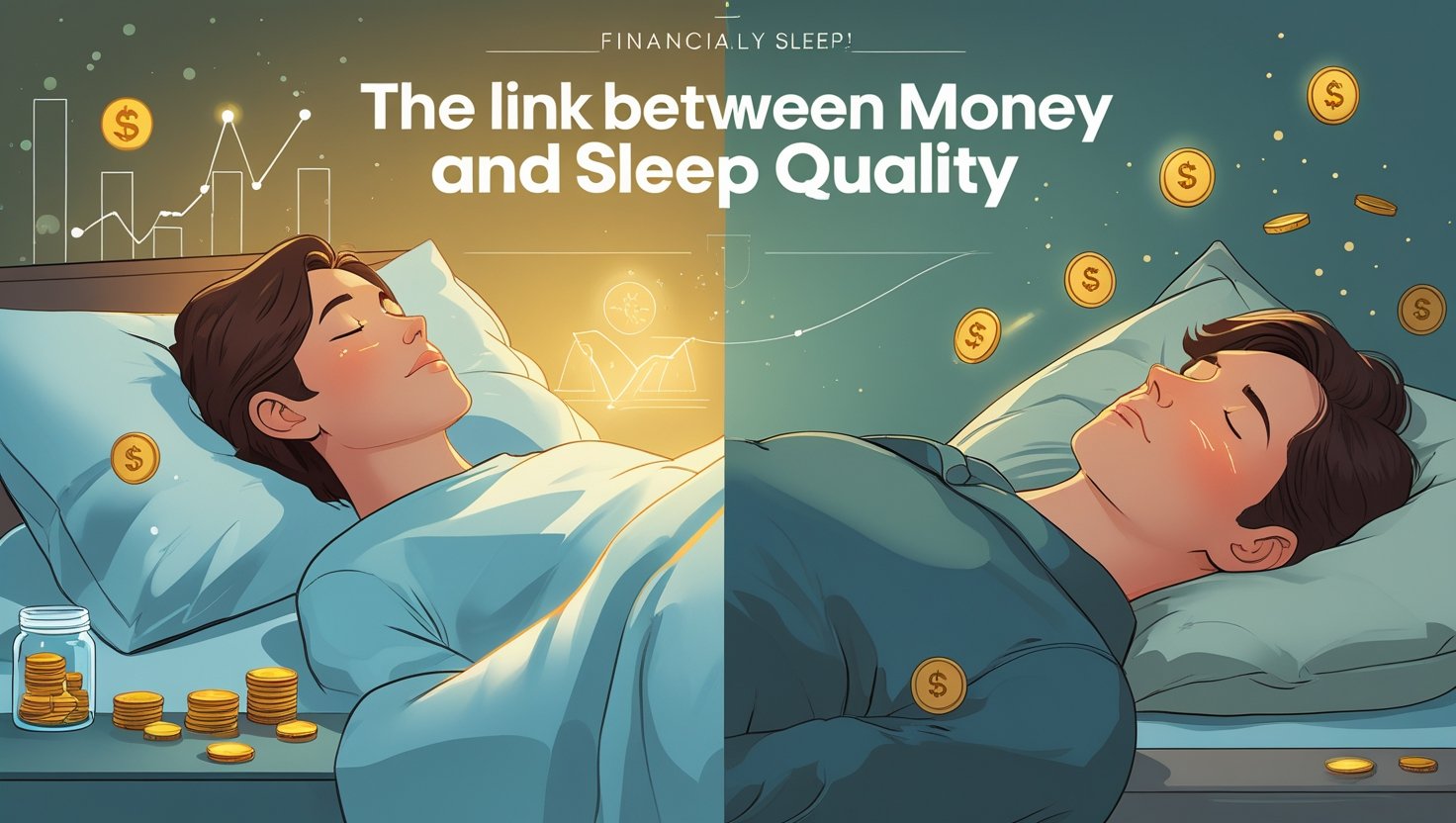
The Link between Money and Sleep Quality:
Sleep is a basic part of human health, which is essential for our physical, mental, and emotional well-being. But often people suffer from a lack of sleep or poor quality of sleep because they are worried about money. In today’s time, when inflation is rising, trust in jobs has reduced, and household expenses are increasing day by day, financial tension has entered every person’s life. This financial pressure does not give tension only during the day, but keeps the mind busy during the night as well, due to which a person is not able to get peaceful sleep.
The connection between sleep and money may seem strange at first glance, but when you understand deeply how financial stress affects your mind, you will realize that these two things are closely linked to each other. When there is stress regarding money, sleep comes in breaks or you do not sleep at all, and then the next day, you feel more stressed and less productive. This blog will explore this sensitive but important link of how money and sleep affect each other, and how better money management can improve your sleep health as well.
How Financial Worries Disrupt Sleep Patterns
When a person is under pressure for money, it not only affects his daily bread but also affects his mind, preventing him from sleeping peacefully at night. Financial worries like the pressure of bills, loan repayment, or fear of job loss keep roaming in the mind again and again. When you try to sleep peacefully at night, these thoughts roam in your mind like a voice. This overthinking increases stress hormones like cortisol, which makes it difficult to sleep or sleep comes in a disturbed manner.
This situation is not a matter of a few days; if your financial pressure is constant, then this disruption continues for a long time. Scientific research shows that during financial stress, the amygdala of the brain becomes overly active, which increases emotional responses and disturbs the natural cycle of sleep. Because of this, it takes time to sleep, sometimes sleep breaks in the middle, and sometimes a person wakes up in the morning and is unable to sleep again. When you do not get complete sleep, the next day you feel mentally and physically drained, and the stress increases even more. This vicious cycle deeply impacts your productivity, health, and mood. Therefore, it is important that financial stress is identified and managed so that peace of sleep can be regained.
Insomnia and Sleep Disorders Linked to Financial Stress
Insomnia, i.e., sleeplessness or waking up frequently during sleep, has become a common problem these days, but people often make mistakes in understanding its real meaning. Financial stress is one of the hidden reasons that deeply affects the sleep of a person. When a person is thinking all the time about how to pay the loan, how to pay the bills, or how to spend the next month, then his mind becomes completely active and makes sleep the second priority. Research shows that people who live under chronic financial stress are more likely to have sleep disorders like insomnia, delayed sleep onset, and fragmented sleep. Thinking about money throughout the night becomes their routine, which not only reduces their sleep quantity but also improves their sleep quality. If this sleep disruption continues for a long time, it can lead to anxiety, depression, and even physical illnesses like high blood pressure and diabetes. A person’s energy level, concentration, and emotional stability are directly linked to sleep, and when these things get weak, it affects every sphere of life. Therefore, taking financial stress lightly can make the problem of sleep even deeper. Insomnia is not just a mental problem but often has a financial background, which is very important to understand and address.
The Role of Socioeconomic Status in Sleep Health:
Socioeconomic status, i.e., income, wealth, and social status of a person, not only affects their lifestyle but also has a direct impact on their sleep. People who belong to low-income households have a common issue – poor sleep quality. Often these people work in shift-based jobs, where their routine is not fixed, and sometimes they work at night. The combined pressure of long working hours, physical exhaustion, and job insecurity affects their sleep. Such people remain surrounded by stress even at night, thinking that if the work goes on, then how will the next bill be paid? They neither have the resources to relax nor can they afford a sleep-friendly environment.
Small spaces, crowded homes, and noisy pollution also become hindrances to their sleep. Socioeconomic struggles put a person under emotional and mental stress, which is directly linked to poor sleep. When it becomes difficult to fulfill a person’s basic needs, the mind remains always alert, due to which the body is unable to relax. Due to this, both health and productivity decline. It is very important to understand that economic inequality is not just limited to money, but also has a deep impact on an essential function like sleep. Sleep is a fundamental part of human health, and until socio-economic issues are addressed, it will be difficult to improve sleep health.
Breaking the Cycle – How Better Money Management Can Improve Sleep:
When it comes to breaking the cycle of financial stress and poor sleep, the first step is to make better arrangements for money. When you bring discipline to your financial planning, your mind is more relaxed at night. Making a budget, clearly writing your income and expenses, and setting priorities are all tools that reduce your financial stress. When you know which bill to pay at what time, how much savings are needed, and how to create an emergency fund, the uncertainty is reduced. Uncertainty is the spark that becomes an obstruction to sleep. Good money management helps you handle both short-term and long-term goals better.
Moreover, if you improve your financial literacy, impulsive spending also reduces, which helps you stay away from the debt trap. When the brain is relaxed, the cortisol hormone levels also remain normal, due to which the body naturally shifts into sleep mode. Along with this, sleep hygiene like reducing screen time before going to sleep, avoiding caffeine, and maintaining a routine are also important. When financial peace and healthy sleep habits go together, the sleep pattern returns to normal. Good sleep does not just come from ways of sleeping, but is also inseparably linked to strong financial control.
Conclusion:
Money and sleep are two topics that seem different, but in reality, they are deeply related to each other. When a person does not have financial peace, its effect falls directly on their sleep. The tension of money all the time, the pressure of bills, the worry of loans, and the uncertainty of income consume the mind of a person so much that he is not able to sleep peacefully even at night. He gets sleep intermittently or sometimes not at all. This condition is not just for a few days; rather, if the financial stress continues, it can lead to chronic insomnia and even mental health problems. On the other hand, when a person’s sleep is not complete, his mood, decision-making, and productivity also decline, due to financial problems increasing.
This is a dangerous cycle that takes both health and life in a negative direction. But the happy thing is that this cycle can be broken if we learn to manage our money better. We can give peace to our minds by making planning, budgeting, mindful spending, and stress control techniques a part of our routine. When financial confidence increases, our sleep also improves. For a good sleep, not only is a mattress or a dark room required, but a relaxed and secure mind is also necessary. Therefore, understanding money and its sensible arrangement not only gives peace to the pocket but also to the sleep.